Liver Transplant Outcomes
Understanding Transplant Center Quality, Outcomes & SRTR Data
Choosing a transplant center is an important decision. To promote transparency and informed choice, transplant centers report quality and performance data to the Scientific Registry of Transplant Recipients (SRTR), a national registry that tracks transplant outcomes across the United States.
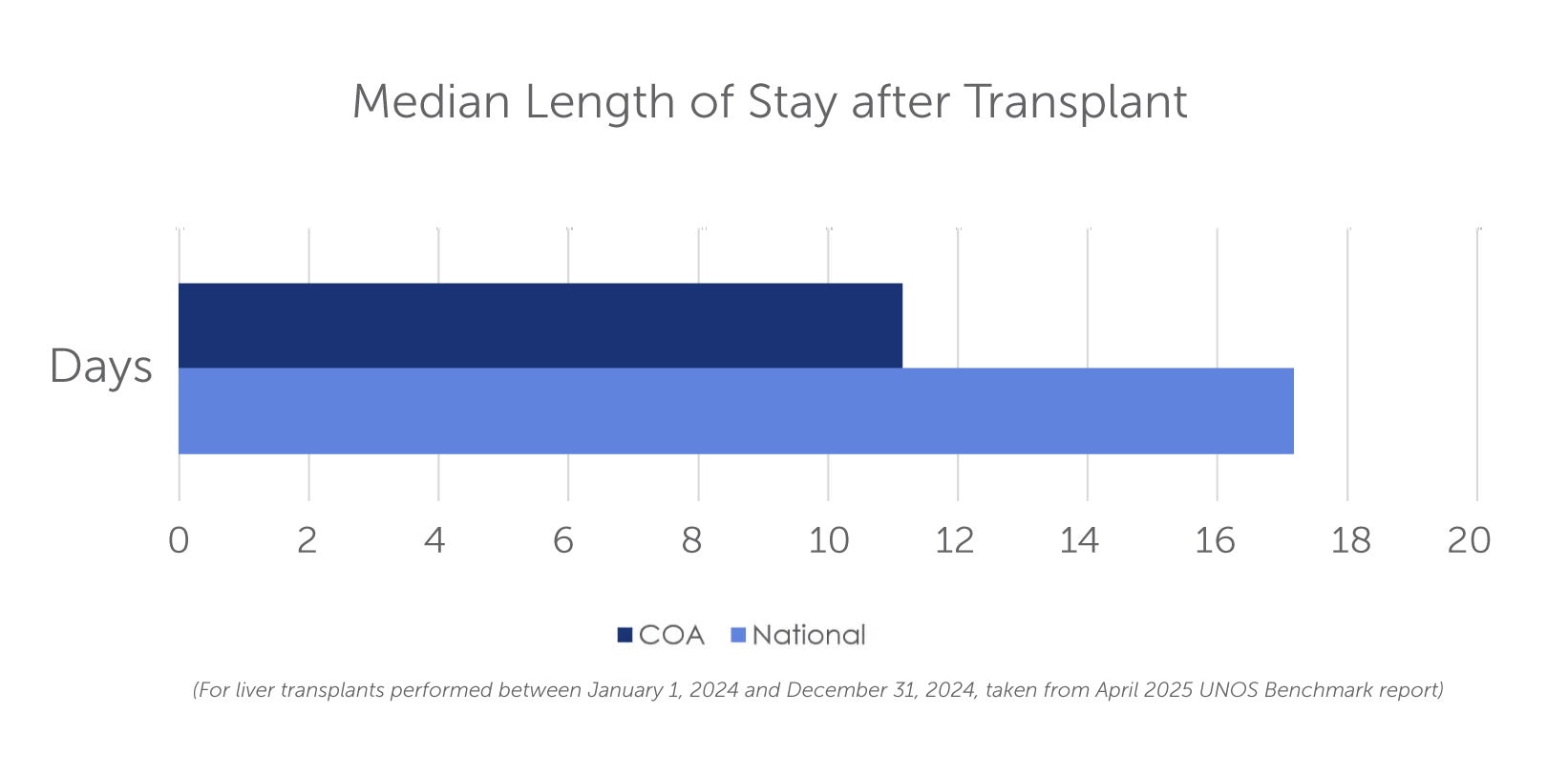
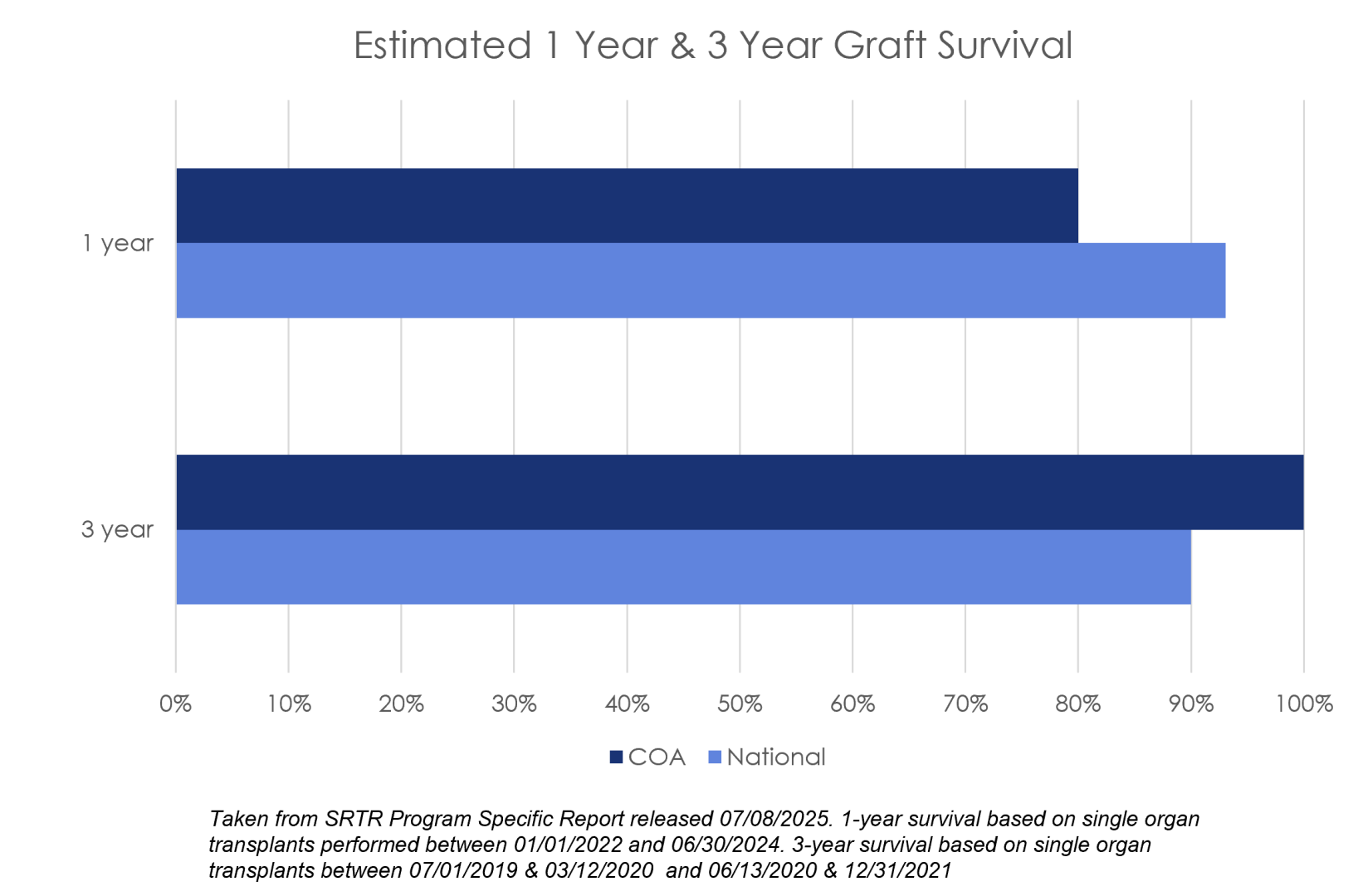
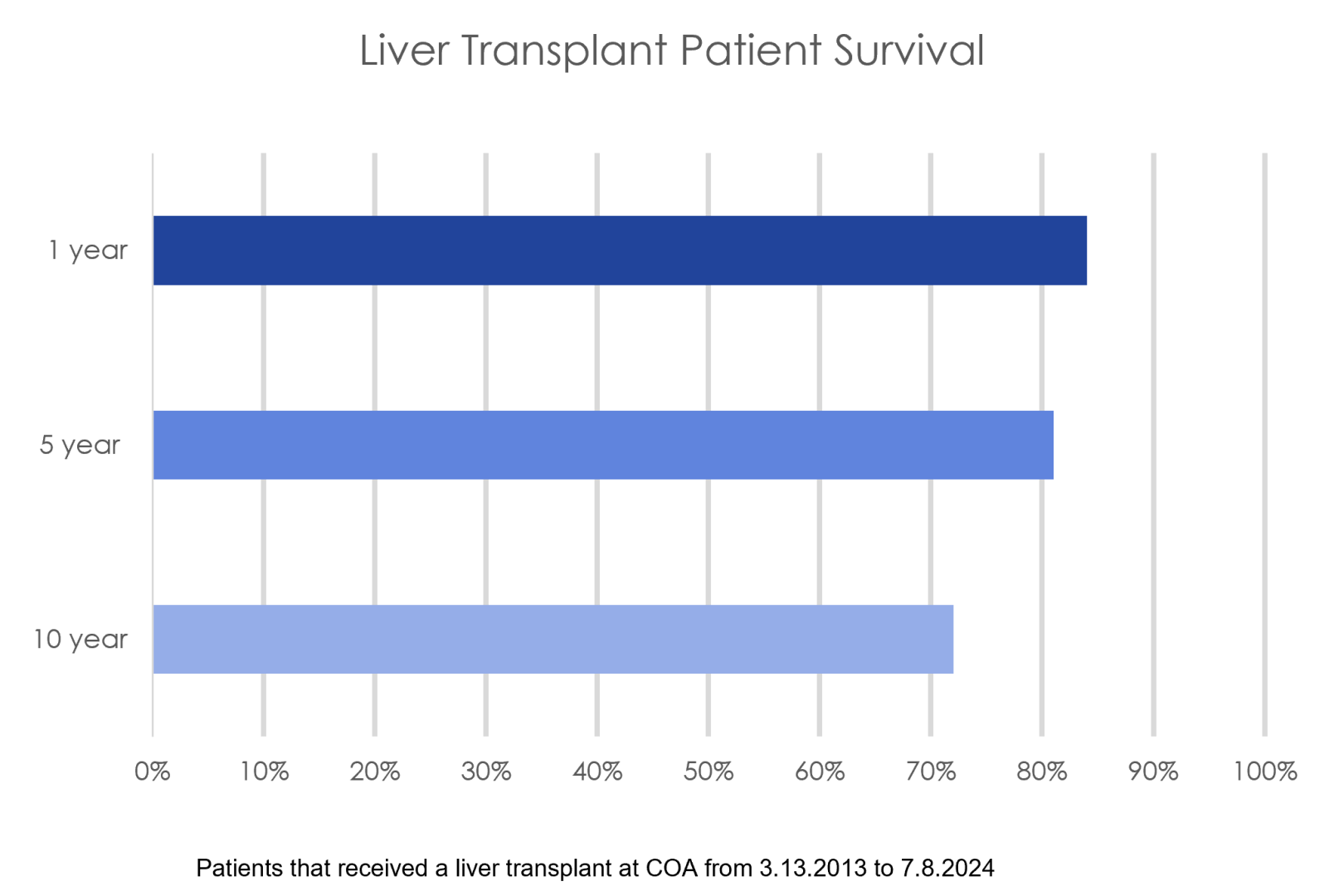
The metrics presented on this page summarize transplant center performance across key measures such as patient survival, graft survival, waitlist outcomes, and post-transplant follow-up. These measures are rigorously risk-adjusted to account for differences in patient complexity, allowing for fair and meaningful comparisons across programs.
Beyond national reporting requirements, our transplant center is committed to continuous quality improvement. Our quality initiatives focus on:
- Optimizing patient and graft survival through evidence-based clinical protocols and multidisciplinary care
- Improving waitlist management and access to transplantation, including timely evaluation and listing
- Reducing complications and readmissions through proactive monitoring and coordinated post-transplant care
- Enhancing patient safety and outcomes by routinely reviewing performance data, clinical outcomes, and regulatory benchmarks
- Promoting patient-centered care, including education, shared decision-making, and long-term follow-up support
SRTR data is reviewed regularly by our transplant leadership, quality teams, and clinicians to identify opportunities for improvement and to guide programmatic changes. While these metrics provide important insight into overall performance, they reflect population-level outcomes and may not predict individual patient experiences.
We encourage patients and families to use this information as one part of the transplant decision-making process and to discuss these data with their transplant care team to better understand how outcomes relate to their specific medical situation.