River Webb
July 16, 2026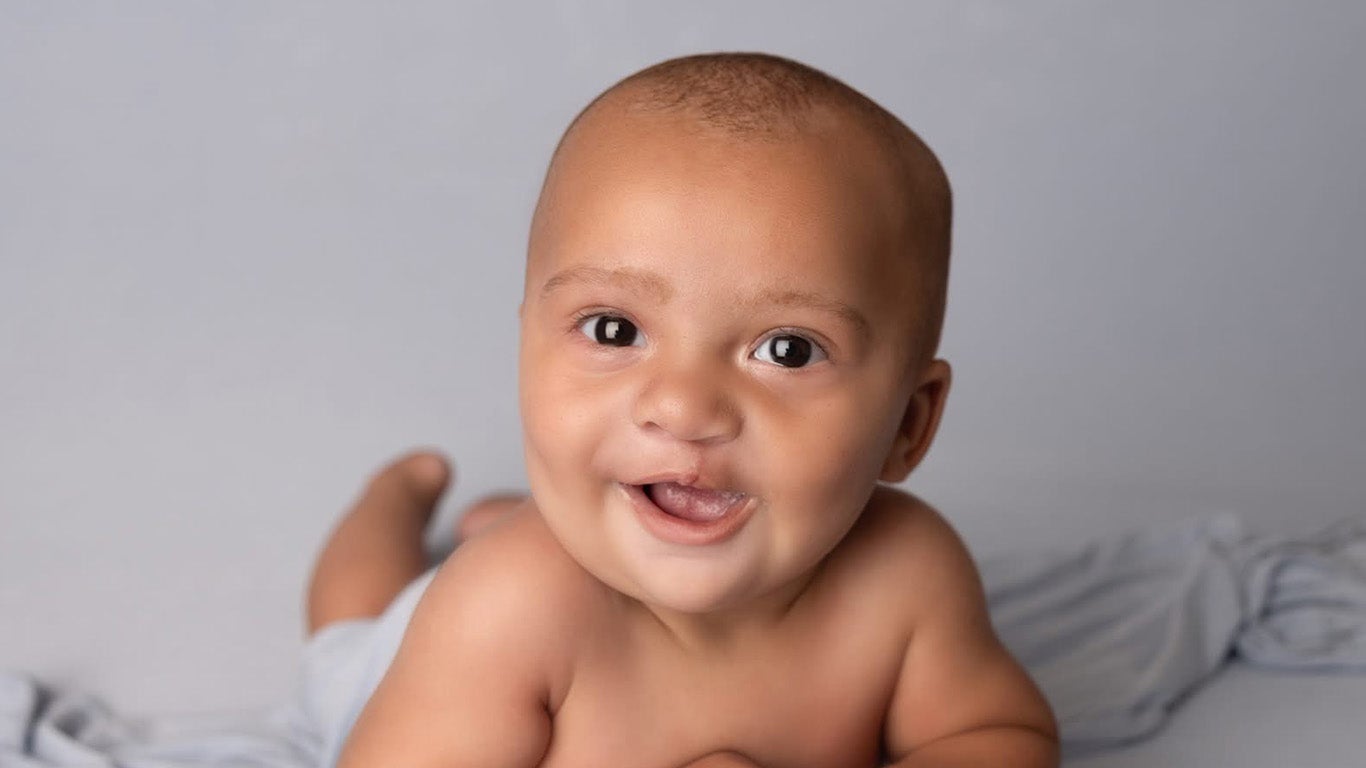
Before River Webb was born, his story had already taken an unexpected turn.
At 20 weeks pregnant, Q and Maggie Webb went in for what was supposed to be a routine appointment. Though by the time she left, she had been given an unforeseen diagnosis about River. “They found he had a cleft,” Maggie explains.
To confirm the finding, Maggie was referred to maternal fetal medicine at UAB, where specialists confirmed a cleft lip and suspected involvement of the palate. That referral opened the door to a care team at Children’s of Alabama that would help guide River’s care from before birth and well beyond. While still pregnant, Maggie began meeting with the hospital’s cleft and craniofacial team—an early introduction that made all the difference. “They started meeting with me early and walked us through what we could be dealing with,” she says. “That was incredibly helpful.”
Those conversations didn’t just prepare Maggie medically—they prepared her emotionally. Doctors explained that babies born with clefts often require time in the NICU, sometimes unpredictably. “It was really nice to be able to have that conversation so we weren’t hit with it once we got there,” she adds.
River’s diagnosis ultimately proved more straightforward than they initially feared. Though there had been concerns about genetic conditions and even a potential kidney issue during pregnancy, post-birth evaluations showed that his cleft lip and palate were isolated. But within days of his birth, River was back at Children’s, meeting his full cleft team in person. That continuity of care is a hallmark of the program, where surgeons, geneticists, audiologists, and speech therapists collaborate under one roof. “It’s so nice we didn’t have to find any of these resources,” Maggie said. “They have everyone there for every possible thing he might run into.”
River’s first surgery—repairing his cleft lip—came earlier this year. In the lead-up, a care coordinator helped guide Maggie through both the logistics and the emotions. “There was a lot of crying,” she says. “She was so comforting through it.”
The surgery was successful, and River adapted quickly, even relearning how to eat after the repair. Recently, he just completed his next major procedure: reconstruction of his palate, a more complex surgery that required a longer hospital stay and recovery. “This surgery was harder healing-wise—which they warned us about—so it meant a lot to have the support of everyone Children’s,” Maggie says. “The nurses were also sharing helpful tips with us that they’ve learned along the way to help us help River.”
His care is led by Dr. Myers, part of a team that has already mapped out years of treatment ahead. Children born with cleft conditions often require multiple procedures—from early repairs to later bone grafts, orthodontics, and potential speech interventions. “It can be like 10 to 15 surgeries,” Maggie says.
But even with that long road ahead, what stands out most to her is not the number of procedures—it’s the sense of partnership. “They are being proactive,” she explains. “Even though we don’t have any issues right now, they’re watching everything.”
Today, River is thriving. Some speech sounds remain a challenge for now, but his team is ready if and when he needs support. For Maggie, the experience has reframed what could have been overwhelming into something steadier, even hopeful. “There’s such a peace of mind in having the team at Children’s,” she says. “They’ve seen it all. They know what to do, and they make sure we do too.”