Libby Barrett
July 7, 2026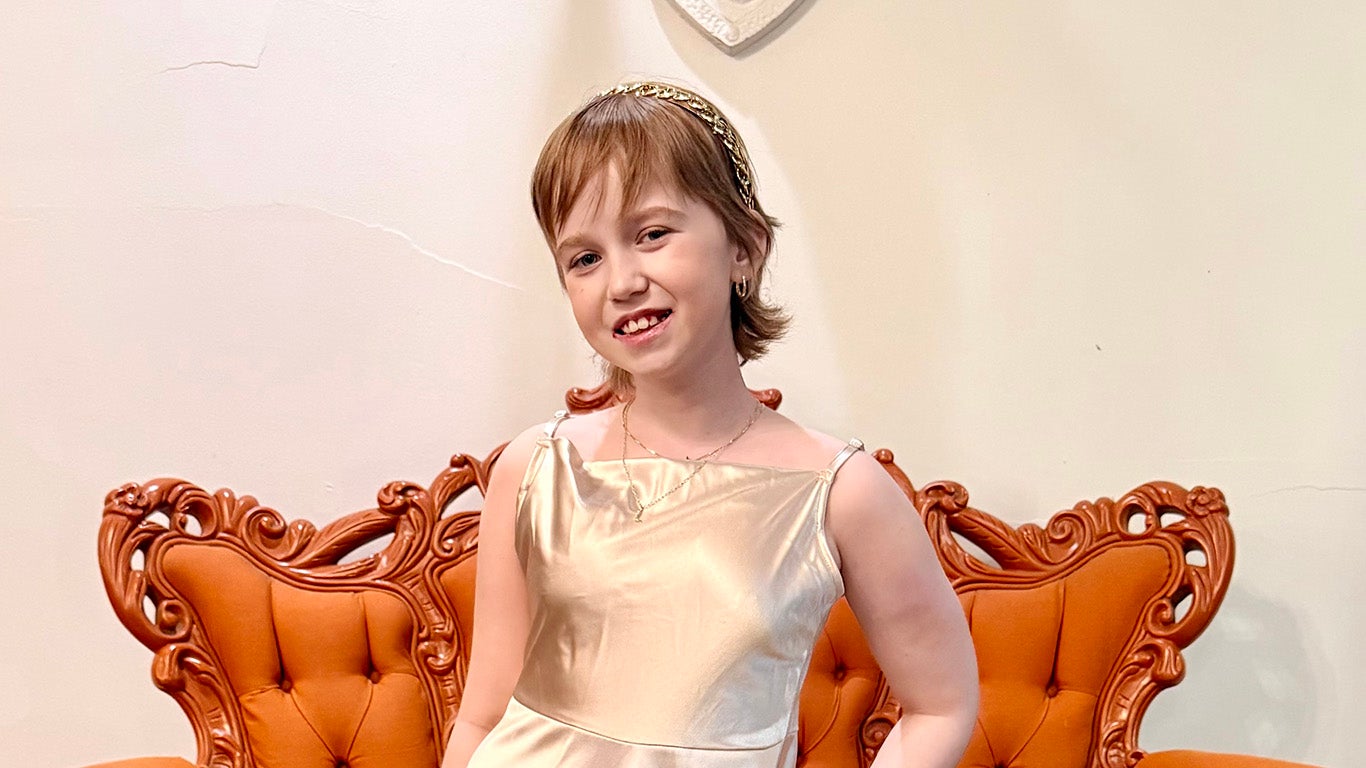
Libby Barrett
Libby Barrett was a typical nine-year-old in every way that matters—school, friends, and the typical childhood routine. When she came down with what was thought to be pertussis, her family expected it to run its course. Her doctor even noted it was unusual, since she was fully vaccinated, but they began treating it with the assumption she would improve. She didn’t.
“She was actually getting worse,” her mom, Jennifer, recalls.
Just a few short weeks later, a return visit to her primary care doctor led to more labs just to make sure nothing was being missed. That afternoon, the unexpected call came in. “Her doctor called and said Libby needed to get to Children’s of Alabama immediately because her blood counts were dangerously low,” Jennifer explains. “We loaded her up and drove straight there.”
Over the next few days at Children’s, Libby’s medical team worked urgently to understand what they were seeing. They knew for sure that her bone marrow was in complete failure and that she needed to quickly move forward with a bone marrow transplant.
As doctors prepared for that possibility, they began a full round of testing to make sure there were no hidden risks that could complicate transplant. It was during that deeper workup that something unexpected emerged. They found out she had a TERT gene mutation and her telomeres—an area of repetitive DNA sequences located at the end of chromosome that protects them from degradation—were in less than the first percentile across her whole body.
That discovery led to a second diagnosis: dyskeratosis congenita, a rare telomere biology disorder, a genetic mutation causes those protective pieces to break down over time. “With any organ with high cell turnover—bone marrow, liver, skin, lungs—eventually the cells just die off because there’s nothing there to stop them,” Jennifer says. “Right now there is no cure. They just treat the organs as they fail. For her, the bone marrow was the first.”
That diagnosis changed everything.
Because dyskeratosis congenita affects how the body tolerates transplant, Libby’s care team had to take extra time to carefully prepare and determine the safest path forward before moving ahead with her bone marrow transplant. After careful consultation, Libby was finally able to go forward with the transplant a few weeks later. “With bone marrow transplant, they can’t determine if it is a success for two years,” Jennifer explains. “Still, there have been encouraging signs. Her donor numbers look strong. Overall, for what she’s going through and dealing with, she’s doing really well.”
Through every step of her care, Jennifer says Children’s has been a steady presence for Libby, and their entire family, including her husband, Will, and son, Caleb.
“Children’s has truly surrounded us,” Jennifer says. “We’ve been overwhelmed with the way they have cared for all of us. It’s meant so much to have them right here with us every step of the way.”
From physicians and nurses to child life specialists and the entire team at Clinic 8, Jennifer says the care Libby has received has extended far beyond medicine alone. She especially remembers the compassion and dedication shown by the bone marrow transplant team, including Dr. Loretta Parker and Dr. Joseph Chewning, who helped guide Libby through a diagnosis and transplant process unlike anything the hospital had treated before.
“They have taken such great care to put in the hours and the research needed to be able to treat a patient with dyskeratosis congenita they hadn’t had before,” Jennifer says. “There is no time of day or anything they aren’t willing to do to answer a question for us and be right by our side.”
Jennifer also believes Libby’s journey may have looked very different without the physicians who first recognized what Libby was facing.
“I believe God had Dr. Chibuzo Ilonze there that night we came in,” Jennifer says, recalling the hematologist who first met Libby in the emergency department. “Not all doctors even think to check for dyskeratosis congenita. Had he not checked, her treatment plan wouldn’t have been right, and her outcome could have been very different.”
Even during this difficult journey, Libby has continued to focus not on herself, but on the people around her. For her 10th birthday, instead of asking for gifts, Libby worked with her child life specialist, Julianna, to organize donations for other patients at Children’s. At Christmas, she encouraged her school community to support Children’s Sugar Plum Shop, helping provide toys and comfort for children spending the holidays in the hospital.
Libby has continued to look outward at every turn, and Jennifer says having a care team at Children’s that has supported and encouraged that spirit along the way has meant everything to their family. “The team here has helped her through this entire process and has made her feel so loved,” Jennifer says. “We’ve been overwhelmed with the way they care for Libby. She’s so much more to them than just a patient.”