Ureteropelvic Junction Obstruction
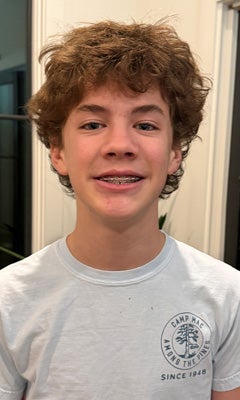
Garrett Davis is a witty 14-year old who loves videos games, music, and spending time with his friends. Known for his great sense of humor, he has a way of making everyone around him laugh.
Between school, hobbies and soccer, Garrett has plenty to keep him busy. But in the spring of 2024, his family noticed that something was getting in the way of his usual routine. Garrett began experiencing pain in his right side. “I would always say that he should drink more water, assuming that he was having a cramp from being dehydrated,” his mom, Tiffany shares. That same fall, just shortly after the start of the school year, Garrett’s pain became more intense, leading to lots of missed school days.
Garrett’s pediatrician referred him to Children’s of Alabama, where he was seen by urologist Ching Man Carmen Tong, D.O. After a series of tests and scans, Garrett was diagnosed in September 2024 with ureteropelvic junction obstruction, a condition where urine cannot properly drain from one or both kidneys, leading them to swell. After his initial diagnoses and meeting with Dr. Tong, Garrett’s family was informed that the blockage was preventing the normal flow of urine, causing both inflammation and pain.
Initially, Garrett’s family hoped that anti-inflammatory medication would improve his symptoms and delay the eventual need for surgery. However, they soon learned that he needed more immediate treatment. Garrett was scheduled for surgery just two weeks later, undergoing a procedure called pyeloplasty, where the blockage is addressed and the ureter is rearranged to protect the blood supply of the kidney. Following the surgery, a temporary tube called a ureteral stent is left inside the ureter to support healing. Dr. Tong was able to perform this surgery using a minimally invasive approach with the da Vinci surgical robot, which has been shown to decrease pain and recovery time after surgery for the right patient.
During the process of recovery, the support received can make all the difference. “He is still in their care and they are amazing,” Tiffany reflects when asked about the Children’s care team. “After surgery we were called by Dr. Tong’s nurse, Nicola Stephens, several times to check on how Garret was doing. If we had questions, there was never a lag time waiting for an answer.”
Within a week after his surgery Garrett was back at school, and about a month later, his stent was removed.
Since then, Garrett has returned to Children’s for his six-month and one-year follow-up appointments, with no reoccurring issues. “Both of those appointments were milestones because the possible development of scar tissue was more likely to occur within those months,” Tiffany mentions.
Today, Garrett is pain-free and back to doing what he loves. He’s now returned to soccer and played every season since his surgery. “It is literally as if he never had an issue,” Tiffany says. “It was a total shock that he would need such a serious surgery and honestly, due to the trust I had in our doctor and nurses, I didn’t feel overwhelmed or scared, even if I should have been. We were well taken care of, well informed, and well respected every step of the way."