Epilepsy
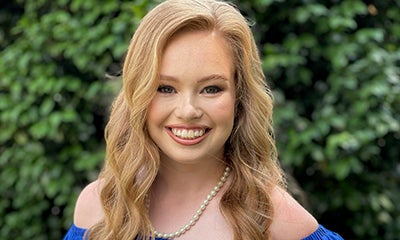
It was nine years ago, during Thanksgiving week, the Franklin family’s life changed in an instant. They were doing something ordinary—painting daughter Briklyn’s room—when the unexpected struck: she collapsed, and her body began to convulse. “We were freaking out,” her father, Anthony shares. “She started turning blue. I thought I was watching her die and I couldn’t do anything about it.”
Paramedics rushed her to Children’s of Alabama, where doctors suggested it might be a one-time event, possibly linked to paint fumes or a brief loss of consciousness. But her pediatrician urged an EEG just to be safe. Days before that appointment, Briklyn experienced a second episode—this time a blank spell she didn’t fully recall. “She went upstairs and began flipping the light switch on and off trying to raise the garage door,” explains her mother, Kellie.
The EEG a few days later confirmed it: abnormal spikes consistent with seizures. In January 2017, Briklyn was diagnosed with epilepsy. Dr. Goyal immediately started Briklyn on anti-seizure medication, which seemed to bring some control at first. But they quickly returned. By April 2018, after multiple breakthrough seizures, Briklyn’s care team at Children’s recommended admission to the Epilepsy Monitoring Unit (EMU) on the hospital’s 10th floor. “It was then that we first heard the words I had been dreading: that she had drug-resistant epilepsy,’” Kellie says. That was a really hard moment for us.”
In the EMU, doctors and nurses monitored Briklyn around the clock, capturing seizures to better understand where in the brain they originated. “It’s the hardest thing as a parent to watch, but also the best because those nurses were right there with her—every second—tending to her,” Anthony adds.
Over the next several years, Briklyn underwent an intense series of evaluations and procedures at Children’s—multiple video EEGs, MEG, imaging studies, and ultimately three stereo EEGs, in which electrodes were surgically placed deep inside her brain. The findings guided two major surgeries: an ablation in 2019 and a brain resection in 2020. Each brought hope. The resection even led to 14 months of seizure freedom—almost. “A day shy,” Kellie says. “It was heartbreaking.”
Still, Briklyn kept fighting, and her care team at Children’s kept searching for answers. In November 2023, after a third stereo EEG helped pinpoint a deeper seizure focus, surgeons performed another resection—one they hoped might finally bring long-term relief. Instead, when Briklyn woke up, she had a right side neglect, with difficulty seeing things on her right, moving her right arm, and she was unable to move her right leg at all. “It was like her brain forgot she had a right side,” Kellie explains.
For more than a year, Briklyn worked through physical, occupational, and speech therapy—fourteen to eighteen months of steady, determined effort. Slowly, she regained strength, balance, and movement. Today, most people wouldn’t notice the small limp that remains. And in May 2024, she celebrated a milestone she’d set her heart on: walking down the aisle at her sister’s wedding—in heels.
Alongside therapy, Briklyn’s team of doctors continued exploring options to reduce her seizures. She had a Vagus Nerve Stimulator (VNS) implanted in early 2024, giving her body an automatic pulse of support every few minutes, plus a magnet she could swipe during a seizure. While it didn’t eliminate her episodes, it improved her recovery time. Wanting to keep pushing forward, she chose to pursue Responsive Neurostimulation (RNS) as well—a device implanted in her skull with leads to her thalamus that detects abnormal electrical activity and responds in real time. Implanted in January 2025, the RNS is still being fine-tuned, but she is already noticing improvement. “She might go two or three weeks without one now,” Anthony says. “We’re seeing progress.”
Through every step, Children’s has remained a second home. In moments of fear, frustration, and uncertainty, the nurses and physicians wrapped their arms around the family—sometimes quite literally. Kellie remembers fighting tears during a monitoring stay when a nurse practitioner quietly placed a hand on her shoulder and said, “It’s OK, Mom. This is where we want her to have seizures. We can keep her safe.”
“That moment changed me,” Kellie says. “Watching the care they gave her, the compassion—they inspired me to become a nurse.” Today, Kellie has been one for almost two years.
For the Franklins, the relationship with Children’s of Alabama is something deeper than medical care. “They’re like family now,” Anthony says. “We can’t say enough good things—they’ve walked every step of this journey with us, and they’ve never once stopped fighting for her right alongside us.”