Ali Lee Plowman
April 6, 2026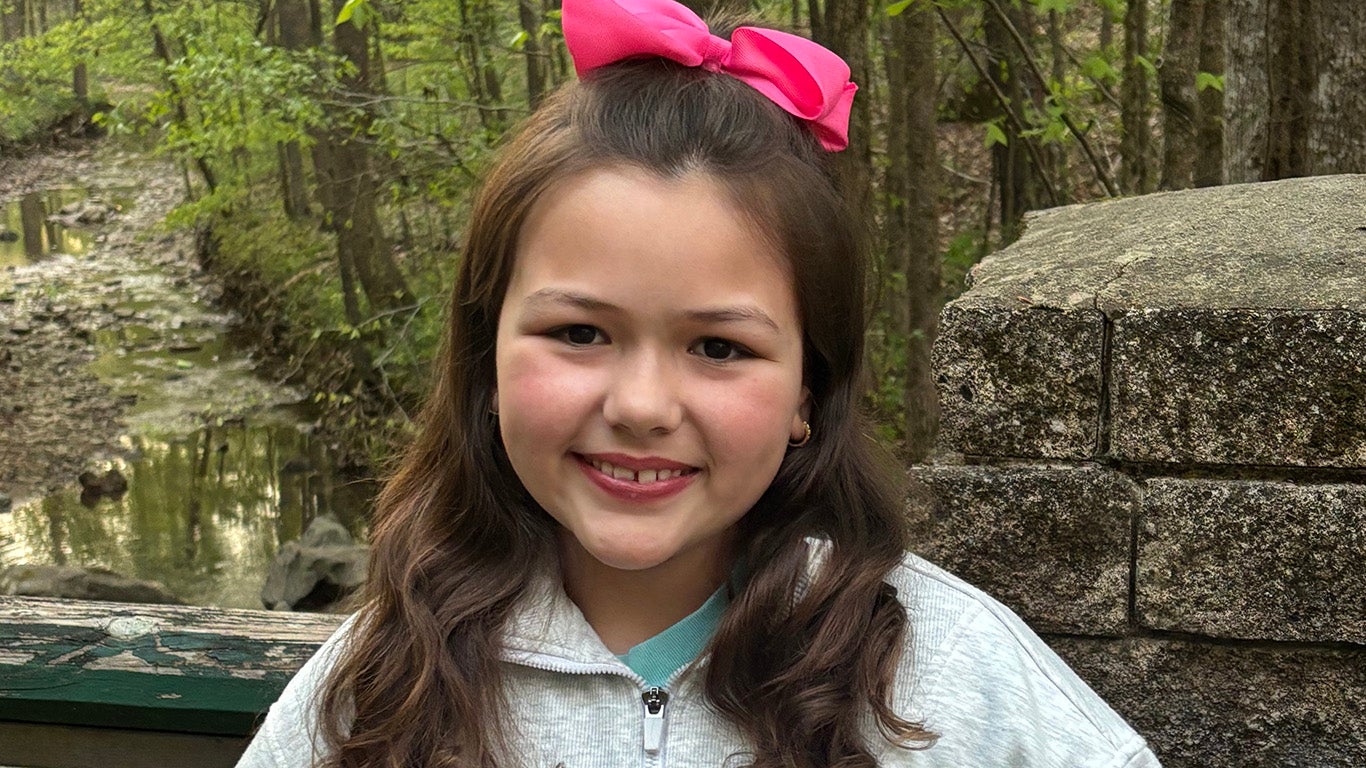
Ali Lee Plowman
Ali Lee Plowman didn’t fit the mold people tend to imagine when they hear the word cancer.
At six years old, she was spirited and full of motion, even as something deeper was unfolding beneath the surface. At first, it came in waves—pain that didn’t stay put long enough to be understood. One day it was her stomach, the next her back, sometimes her legs, each episode intense enough to stop her in her tracks. Her family found themselves in a sporadic cycle, coming in and out of the emergency room in search of answers that never quite materialized.
“We kept going back and forth,” says her mother, Kristen. “It got to the point where she couldn’t walk at times, or her abdomen would hurt so bad she’d almost pass out. It was never consistent—it just kept happening in different places.”
Even as the hospital visits added up, the picture remained unclear. Her labs would come back altered, but not definitive. Nothing pointed cleanly in one direction. It wasn’t until a full-body MRI raised the possibility of something more serious that oncology entered the conversation, and even then, Ali Lee didn’t present in the way doctors typically see. But then one doctor’s decision to examine a smear of Ali Lee’s blood under a microscope changed everything: Ali Lee had leukemia.
Ali Lee was admitted to Children’s of Alabama immediately, and within hours, her family was sitting with her care team, walking through a diagnosis. A bone marrow biopsy confirmed it as Acute Lymphoblastic Leukemia. The conversation was long and detailed, filled with information no parent is ever fully prepared to absorb, but just as important was how that information was going to be delivered to Ali Lee. With the help of a Child Life Specialist, it became much easier. “Through simple explanations and hands-on demonstrations, the diagnosis was translated into something a six-year-old could begin to understand without fear taking over,” Kristen says. “That helped so much—she handled it better than we could have imagined thanks to that.”
Treatment began immediately. The first several weeks were spent in the hospital as doctors moved quickly, combining IV chemotherapy, oral medications, and steroids with procedures like lumbar punctures to protect her central nervous system. A port was placed to make the ongoing treatments more manageable. “It was intense by design, as the doctors wanted to move fast and stay ahead of the disease,” Kristen adds.
Even in the middle of that intensity, there was a deliberate effort to offer Ali Lee childhood fun within the hospital walls. The days were punctuated with art projects and music therapy, small but meaningful interruptions to the clinical routine. If Ali Lee couldn’t leave her room, those experiences came to her—paint supplies, crafts, even visits that turned an ordinary afternoon into something she could look forward to. She gravitated most toward painting, while the nurses, especially during the long night shifts, found ways to meet her where she was—sometimes quite literally, sitting beside her bed as she painted their nails.
After nearly a month, Ali Lee was finally able to go home, but the routine continued. Clinic visits twice a week stretched across months, eventually tapering to once a week and then less frequently, even as treatment continued in different forms. There were setbacks along the way—moments when her immune system dropped so low that even the most ordinary exposures carried risk. “There were times her white blood cell count was zero,” Kristen says. “She’d have an infection, and then we would end up back in the hospital, waiting for her numbers to come back up before we could leave.”
Still, over time, those visits are becoming less frequent. Today, at nine years old, Ali Lee is back in school and enjoying the kind of life that once felt just out of reach—playing basketball, trying gymnastics, and making up for lost time with friends whenever she can.
Her family doesn’t hesitate when asked what carried them through, pointing to the team at Children’s and the way they showed up for them at every turn, guiding them through the hardest moments and making all the difference.
“They became like family,” Kristen says. “Through all the ups and downs—even the scary moments when we were worried about setbacks or relapse—they were always there. They made sure every need we had was met and went above and beyond in ways you don’t always expect in a hospital. They were there for hugs, for reassurance, for all the in-between moments, too. They showed a level of compassion that you don’t always see in the medical field—they really care, and they put themselves in your shoes.”