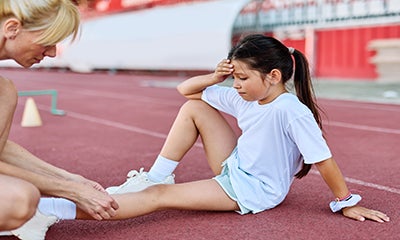
Birmingham, Ala. (Feb. 13, 2026) — Playing sports is a part of a child’s development. Some parents can’t wait until their child is old enough to play catch or football, or to cheer them on from the stands. Sports help a child develop physical skills, get exercise, make friends, learn teamwork, play fairly, and improve self-esteem. While there are benefits to playing sports for children, there are also concerns.
“The common sports injuries that children deal with are fractures, overuse injuries, sprains, strains, and ligament tears,” said Anthony Andrews, athletic trainer at Children’s of Alabama.
According to the National Safe Kids Campaign and the American Academy of Pediatrics, more than 3.5 million children ages 14 and younger get hurt annually while playing sports or participating in recreational activities. Andrews says there is no definitive way to prevent sports injuries. However, he notes that precautions can reduce the risk.
“Listen to your coach, make sure children are learning the techniques that they are supposed to, and make sure their equipment fits well,” said Andrews.
Andrews also stresses the importance of pre-season physicals. He advises that a parent or child inform the doctor of any pre-existing injuries or conditions during the physical exam.
“Depending on the injury and extent of it, if it is just a mild injury, RICE is usually the best thing that a parent can do and then seek medical attention afterwards,” said Andrews.
RICE stands for rest, ice, compression, and elevation. Andrews says parents and their child should also listen to an athletic trainer if one is present. He says trainers can provide information that could help an injured child until they reach a hospital or their pediatrician's office.
The work does not stop once a child has recovered; it is also essential to make sure steps are taken to prevent reinjury. Some children may need new protective gear to protect an injured body part. Children also need to make sure they warm up before practice and games. It is also crucial that a child return to their sport slowly and gradually build back up to their pre-injury level. A child should also know their limits. If a previously injured area or body part begins to hurt, the child should stop and rest. Also, seek medical advice if the pain persists.
Andrews also recommends that parents consider the type of sports their child plays. He says that once a child plays the same sport repeatedly, they are at risk of tendon injuries from the repetitive motion required.
“It’s best for them to do sports sampling where they are encouraged to do multiple sports,” said Andrews.
For more information on how to avoid sports injuries: Click here.