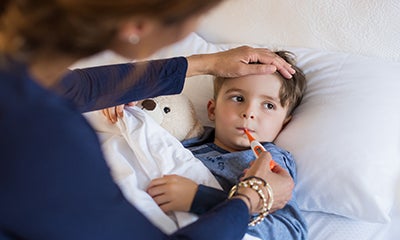
Birmingham, Ala. (Feb. 6, 2026) - When a child becomes sick, one of the first symptoms that parents recognize is a fever. A fever can cause parents to become concerned, especially new parents.
“A fever is our body’s natural reaction to infection,” said Dr. Shaundra Blakemore, pediatric emergency medicine physician at Children’s of Alabama. “It’s part of our body’s natural defenses to try to fight the virus or bacteria that’s making us sick.”
Blakemore states that a normal body temperature is 98.6°F. However, a child or adult’s normal body temperature could fluctuate a point above or below that. For most children, their body temperature remains relatively stable from day to day until germs enter the picture. A fever is defined as 100.4°F or higher.
“Signs of a fever would be a child feeling hot,” said Blakemore. “Sometimes, paradoxically, a child may get chills and get cold. A child may also feel very tired or lethargic or may not want to do anything.”
For most children, the fever will go away within a few days.
“If your child is running around, still playing, acting normal, and you notice that they have a fever, I would say let your child’s body do what it is supposed to do,” said Blakemore.
However, there are cases where a fever requires treatment. Blakemore recommends treating a fever with over-the-counter medication such as acetaminophen or ibuprofen. The medication blocks the chemical that signals the body to increase its body temperature. Children should never take aspirin to treat a fever because it can cause a rare but serious illness. Blakemore also advises parents of children under 3 months old to contact a pediatrician if their child develops a fever. Also, if their child begins to show any of the following symptoms while having a fever, Blakemore recommends parents reach out to their pediatrician:
• Complaining of a severe headache
• Stiff neck
• Sensitive to light
• Vomiting
• Excessive diarrhea
• Not drinking liquids well
• Trouble breathing
• Confused
• Hard to wake up
• Any symptoms more severe than a common cold
Parents should also keep children comfortable with light clothing, rest, and plenty of fluids. Hydration is also important when a child has a fever. That’s because the body heats up and it becomes easy for it to become dehydrated.
When a child has a fever, parents should avoid using ice packs or cold baths, because they can cause shivering, which can raise body temperature. Also, rubbing alcohol should be avoided because it can cause poisoning when absorbed through the skin.
For more information, click here.
Related Providers


Christine Campbell, MD, MSPH
Pediatric Emergency Medicine